Chronic Fatigue Symptoms, Causes, and Treatment: Understanding the Difference from Weakness
Chronic fatigue symptoms can affect both physical and mental well-being.Many people feel constant tiredness, lack of energy, brain fog and struggle to do normal tasks.
Awareness of the symptoms, causes and treatments available for chronic fatigue may help to look for potential underlying health issues.
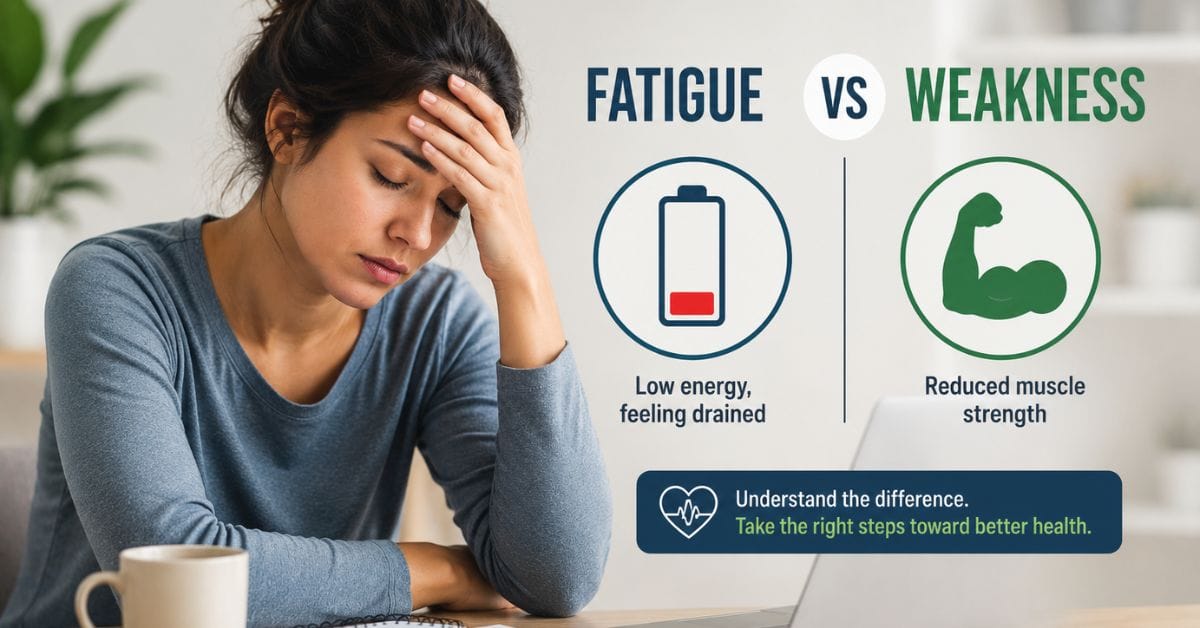
The terms fatigue and weakness are often confused and used interchangeably, but they are not synonymous. They are two different experiences, but both can impact your life and frequently happen side by side.
You can learn to distinguish between them and learn what your body might be saying.
What Is Fatigue?
Fatigue is more than ordinary tiredness. Low energy, fatigue or a lack of physical or mental strength. Simple tasks can become overwhelming at times.
Clinically, those feeling tired may complain that:
- Feeling tired throughout the day.
- “I feel very flat and exhausted and don’t have the energy to do anything.
- “Everything is more difficult than normal.”
- Muscles work normally with fatigue, but you lack the energy or motivation to do so.
Common signs include:
- Persistent tiredness
- Low energy levels
- Difficulty concentrating
- Mental fog
Is tired after normal activities
Poor sleep, emotional stress, too much work, sickness, nutritional deficiencies and some medications can cause fatigue.
What Is Weakness?
Weakness is when there’s a real decrease in muscle strength. Here, the body will lack the ability to perform simple tasks.
A person who is weak might notice:
Trouble putting things up or down.Problems putting things up or down.
- Trouble climbing stairs
- Reduced grip strength
Fast fatiguing muscles during physical activity
Weakness is different than fatigue because it’s not really about tiredness. It is a matter of lessening physical ability.
Weakness may be due to a problem with the muscles, nerves, brain or with the levels of the electrolytes and can be medically evaluated, particularly if it comes on quickly.
In many cases, fatigue and weakness are often mistaken for one another.
Both symptoms can occur with many health issues.
For example:
- Viral infections
- Long COVID
- Fibromyalgia
- Vitamin deficiencies
- Chronic inflammatory conditions
- Depression and anxiety
A person’s energy level may be very low and feel weak even though their muscles are normal In addition, real weakness may cause exhaustion during daily activities.
A basic rule of thumb:
If you’re bringing your grocery shopping and are so drained afterwards that’s probably the problem.
If you find it difficult to hold or lift the groceries as your muscles do not have enough strength, you may have weakness.
What is Chronic Fatigue?
The most frequent chronic fatigue symptoms are; poor concentration, muscle discomfort, headaches, low energy levels, unrefreshing sleep and persistent tiredness..
It is a feeling that persists and is so overwhelming that it lasts for months and doesn’t get much better with sleeping.
This chronic fatigue may impact work, family obligations, exercising, social activities, and quality of life.
Other symptoms can include:
- Ringing in the ears
- Memory difficulties
- Unrefreshing sleep
- Muscle aches
- Joint discomfort
- Headaches
- Increased symptoms after physical or mental activity
Chronic fatigue is a persistent malady that is experienced for six months or more in many instances.
The common lifestyle factors that cause chronic fatigue.

There are a number of common things that people do that can cause chronic fatigue.
Poor Sleep Quality
One of the reasons for recurring tiredness could be sleep issues.
Examples include:
- Insomnia
- Sleep apnea
- Frequent nighttime awakenings
- Irregular sleep schedules
Getting adequate sleep time is not helpful if sleep quality is inadequate.
Nutritional Deficiencies
Nutrients are needed to make energy.
Fatigue may be caused by low levels of some nutrients, such as:
- Iron
- Vitamin B12
- Vitamin D
- Magnesium
Dehydration, poor food choices and not eating can also impact energy.
Stress and Emotionally Exhaustion
The body and mind take a big hit from long-term stress.
Long-term stress can result in:
- Mental exhaustion
- Poor sleep
- Reduced concentration
- Ongoing fatigue
Anxiety and depression are common causes.
Too Little or Too Much Activity
Lack of physical activity over time can decrease endurance. But too much exercise and not enough rest can cause the body to feel drained every day, too.
It’s essential to find a balance.
Medical disorders that can lead to chronic fatigue.
If you are feeling tired all the time, your healthcare provider may explore any potential medical reason.
These include, but are not limited to:
Anemia
A low red blood cell count or iron deficiency may cause a decrease in oxygen delivery to the body which can result in chronic fatigue.
Thyroid Disorders
Fatigue, lethargy and reduced energy are common symptoms of underactive thyroid (hypothyroidism).
Diabetes
When blood sugar levels are not controlled, the body might not be able to use energy efficiently.
Read more:Best Homeopathic Medicine for Weight Loss-Lose Fat Naturally
A variety of heart, kidney and liver ailments.
Fatigue can be due to chronic conditions of major organs.
Autoimmune Diseases
Many inflammatory conditions, like rheumatoid arthritis and lupus, can cause fatigue.
Infections
Fatigue can be a side effect of some infections and last long after the infection has gone.
Examples include:
- Influenza
- Epstein-Barr virus
- Long COVID
Understanding ME/CFS
Myalgic Encephalomyelitis/Chronic Fatigue Syndrome (ME/CFS) is a condition that is strongly correlated with chronic fatigue.
ME/CFS is a chronic illness defined by profound fatigue not accounted for by standard medical evaluation which is not significantly improved with rest.
Common symptoms are:
- Extreme exhaustion
- Unrefreshing sleep
- Cognitive difficulties
- Post-exertional malaise (symptoms getting worse after exertion)
Research is ongoing, and several factors could be involved:
- Viral infections
- Immune system changes
- Genetic susceptibility
- Abnormal energy metabolism
Stress, either physical or emotional
As it stands, there are no known causes that can explain every case.
Other factors that may contribute (less common):
There are also a number of other factors under investigation:
- Hormonal imbalances
- Gut microbiome changes
- Chronic inflammation
- Environmental exposures
These are sites of ongoing scientific inquiry although the evidence is developing.
Read more:Homeopathy Treatment for Hormonal Imbalance | Signs, Symptoms & Wellness Guide
When to get medical advice?

Frequent tiredness is common, particularly if anxious, or following illness.
Consider talking to a healthcare provider if, however:
- Fatigue lasts several weeks or longer
- Symptoms are worsening
Daily activities are challenging
You have lost weight for no known reason.
A shortness of breath begins to occur
There is a prominent weak spot.
There are new neurologic signs that develop
A physical exam and laboratory tests may be recommended by a healthcare provider to help determine the cause.
Final Thoughts
Fatigue and weakness can appear to be the same thing, but they’re actually two different experiences. Weakness is a decrease of muscle strength, fatigue is a loss of energy and endurance.
Tiredness can be persistent but you must not take it lying down. In most cases, the cause may relate to sleep quality, nutrition, stress or an underlying medical condition that can be treated properly.
Being mindful of long-term symptoms and getting assessed if necessary is one of the key steps to regain energy, boost well-being and promote long-term health.
Frequently Asked Questions (FAQ):
1. What are the typical chronic fatigue symptoms?
The most common chronic fatigue complaints are extreme tiredness, brain fog, poor sleep, lack of energy, headaches, muscle aches and difficulty concentrating.
2. What are the most common symptoms of chronic fatigue?
Chronic fatigue is characterized by constant tiredness, low energy, poor attention and concentration, lack of restfulness, and muscle pain, headaches, and fatigue from little or no exertion.
3. What is the reason for chronic fatigue among adults?
The chronic fatigue may be associated with less sleep, chronic stress, anxiety, depression, anemia, thyroid problems, diabetes, vitamin deficiencies and other underlying health conditions. It’s crucial to determine the cause of the problem for successful treatment.
4. Are chronic fatigue symptoms due to vitamin deficiencies?
Yes. Ongoing fatigue, weakness, and lower energy levels can be a contributing factor to low levels of iron, vitamin B12, vitamin D, and folate. Blood tests can assist in assessing if there is a deficiency.
5. What is the difference between fatigue and weakness?
Fatigue is defined as decreased energy or fatigue, weakness is a loss of muscle strength. Fatigue can make a person so tired that he or she is unable to do activities, and weakness can make it difficult for a person to do tasks.
6. Is chronic fatigue a symptom of thyroid problems?
Yes. One of the most typical health problems that cause fatigue is hypothyroidism, or when your thyroid doesn’t function at its normal level. Additional symptoms can be weight gain, cold intolerance, dry skin, and slow thinking.
7. Can chronic fatigue be an anemia symptom?
It can be. Anemia decreases the body’s capacity to get oxygen to the tissues, and can cause weakness, tiredness, shortness of breath, dizziness, and lack of energy.
8. How is chronic fatigue diagnosed?
There is no one test that can be used to diagnose chronic fatigue. A thorough medical examination involving a physical examination, review of medical history, symptoms, sleep records, medications and laboratory tests is used to determine the cause.
9. How to treat chronic fatigue?
Treatment will vary based on the cause. These include optimizing sleep quality, managing stress, correcting nutritional deficiencies, treating underlying medical conditions, staying active and adhering to a well-balanced diet.
10. Is fatigue and lack of energy a symptom of dehydration?
Yes. Even slight dehydration can impair physical performance, concentration and cause tiredness and fatigue during the day.
11. When to see a doctor for chronic fatigue?
If you’re feeling tired or fatigued for several weeks, it’s interfering with your everyday activities, getting worse over time, or combined with other symptoms like weight loss, breathing problems, chest pain, or having a lot of muscle weakness, you should seek medical advice.
Best Homeopathy Specialist Near Me
You can read-
- Gout vs Arthritis Explained: Causes of Joint Pain & Effective Treatment Guide (2026)
- Can Homeopathy Really Help You Grow Taller? A Natural Approach to Height Increase
- junk food and healthy food paragraph
- Kidney Stone Treatment Cost & Natural Cures (Homeopathy Guide 2026)
Related Searches
- best homeopathy doctor for hormonal imbalance
- homeopathy treatment for irregular periods
- homeopathic doctor in Dhaka
- homeopathic doctor in Bangladesh
Resources: https://www.cdc.gov/me-cfs/?utm_source=chatgpt.com

Dr. Khatun invites you to join her in this journey with City Homeo. Your engagement and encouragement are crucial in advancing this endeavor. Together, we can strive towards a healthier community and a better tomorrow.